
Your AML manual is up to date. But is your business actually compliant?
An AML manual is only the starting point. It tells your team what to do. Real compliance means putting those policies into action every day, and being able to prove that you did. An AML manual sets the rules. Implementation proves compliance.
At a glance
- Eight areas turn a manual into practice: KYC verification, CDD, screening, monitoring, reporting, training, testing and evidence.
- Supervisors look at what you do, not only at what your manual says.
- Each policy should have a matching process, an owner and a record.
- Regular testing shows whether the controls work as written.
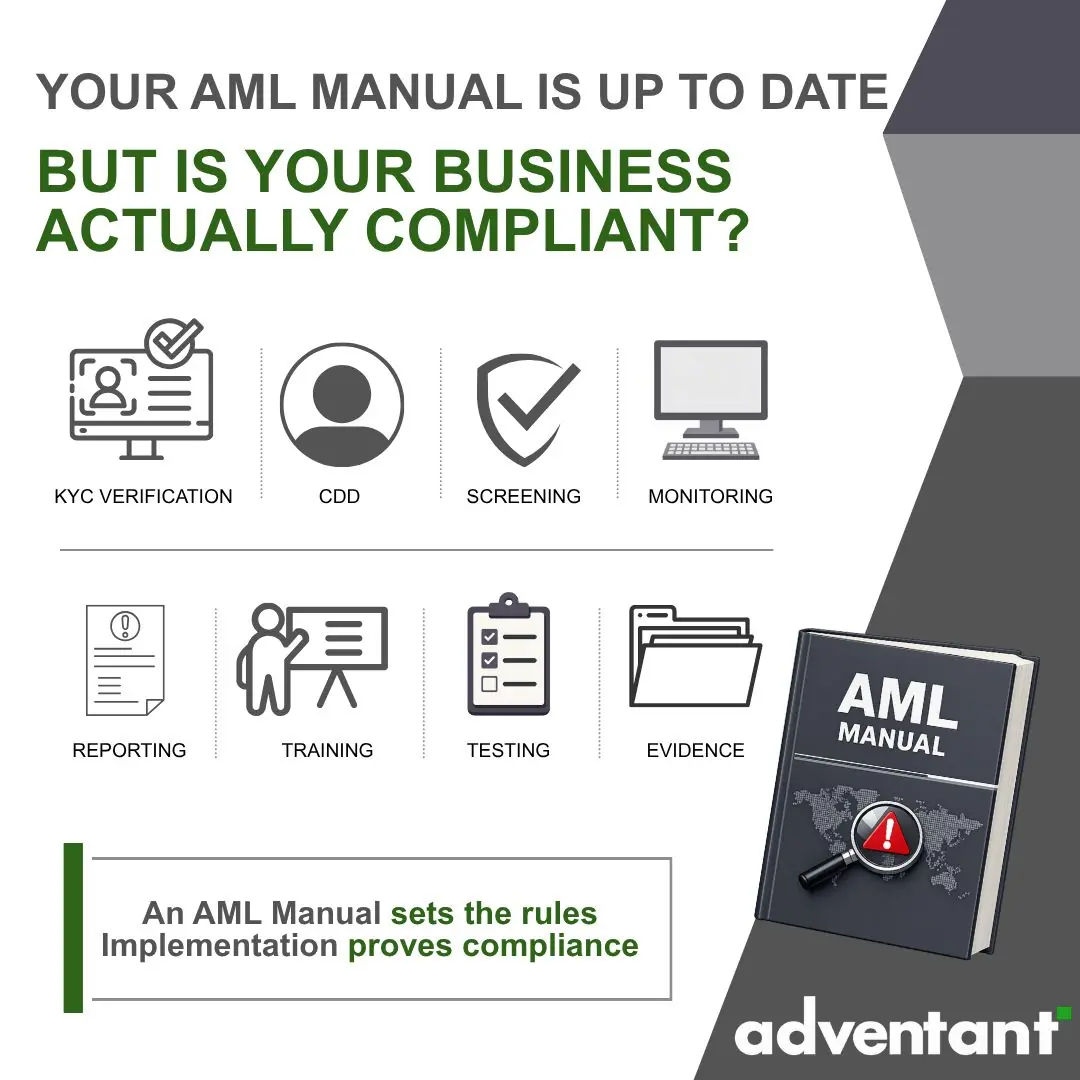
Eight areas where an AML manual has to become day-to-day practice.
The detail, step by step
KYC verification and CDD
Identify and verify every customer and their beneficial owners, understand the purpose of the relationship and rate the risk, exactly as your manual describes.
Screening
Screen customers against sanctions and PEP lists at onboarding and on an ongoing basis, and resolve possible matches with a recorded decision.
Monitoring
Monitor customer activity against what you expect from them, and review alerts promptly. Monitoring that nobody reviews is not a control.
Reporting
Make sure staff know how to raise a concern, that the compliance officer or MLRO reviews it, and that reports are filed where there are grounds to suspect.
Training
Train staff on the manual and on the red flags that apply to their role, and keep attendance and assessment records.
Testing and evidence
Test the controls regularly, through internal checks or an independent review, and keep the evidence. If it is not documented, it is hard to show that it happened.
Mistakes to avoid
- Buying or copying a manual that does not match how the business works.
- Updating the manual but not the processes and systems behind it.
- No named owner for each control.
- Training once at joining and never again.
- Keeping no record of checks, so nothing can be shown at inspection.
Evidence to keep
- The approved, dated AML manual and its review history.
- Customer files that follow the manual's CDD steps.
- Screening, monitoring and reporting records.
- Training logs and the results of control testing.
Where Adventant can help
General information only, not legal or compliance advice. The examples and figures are invented for illustration. Your obligations depend on your activities and your regulator, so check the current rules that apply to you or speak to Adventant about your situation.