
UAE AML topics, drawn out in full.
Each explainer takes one topic and shows it end to end, with an illustration, the detail behind every step and the mistakes to avoid. General information, not legal advice.
One topic, in depth.
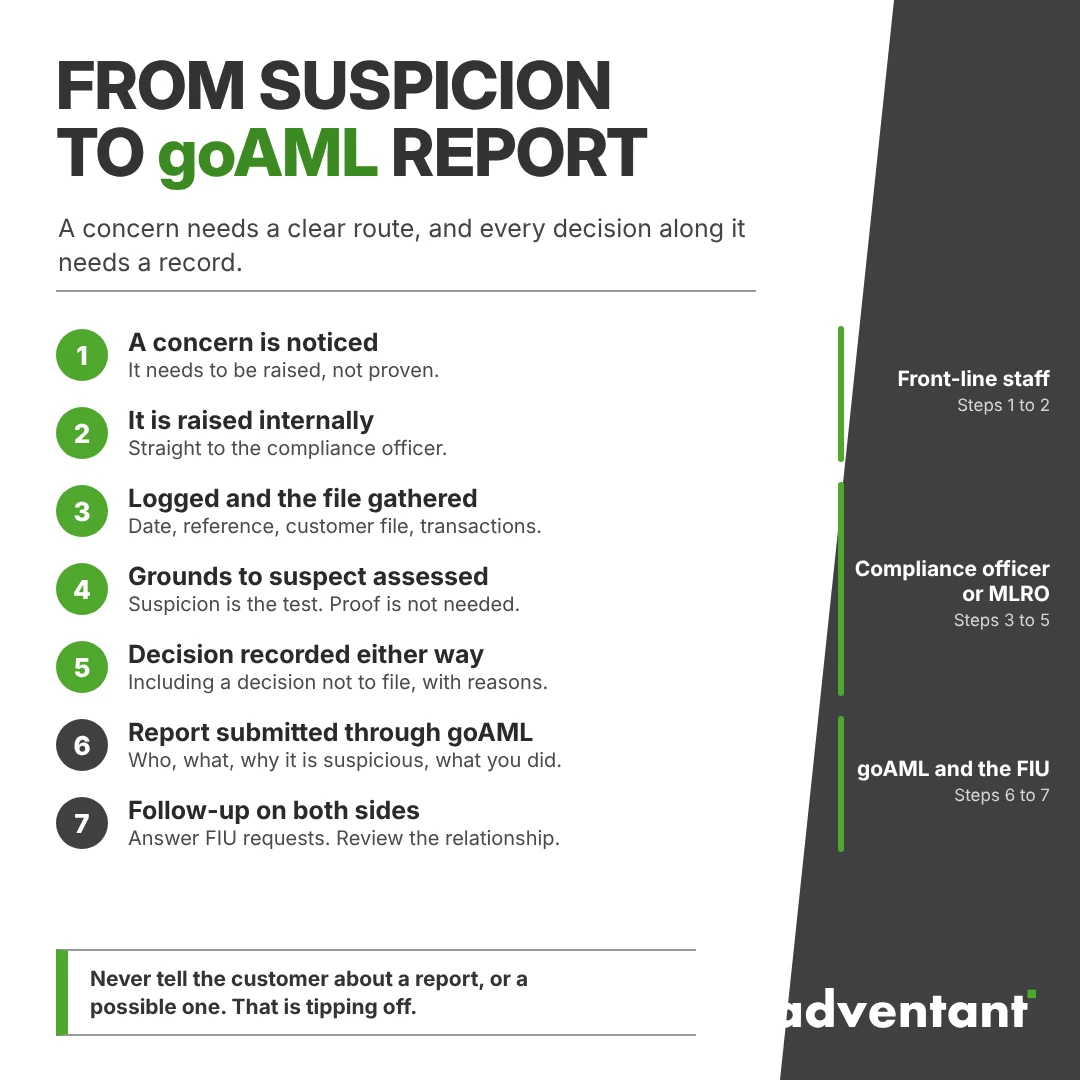
From suspicion to goAML report: the full journey
A suspicion has a route. It starts with a person on the front line, passes through your compliance officer and, where there are grounds to suspect, ends as a report to the UAE Financial Intelligence Unit (FIU) through goAML. The illustration shows who does what at each stage, where the decisions are made and where the records belong.
Read the explainer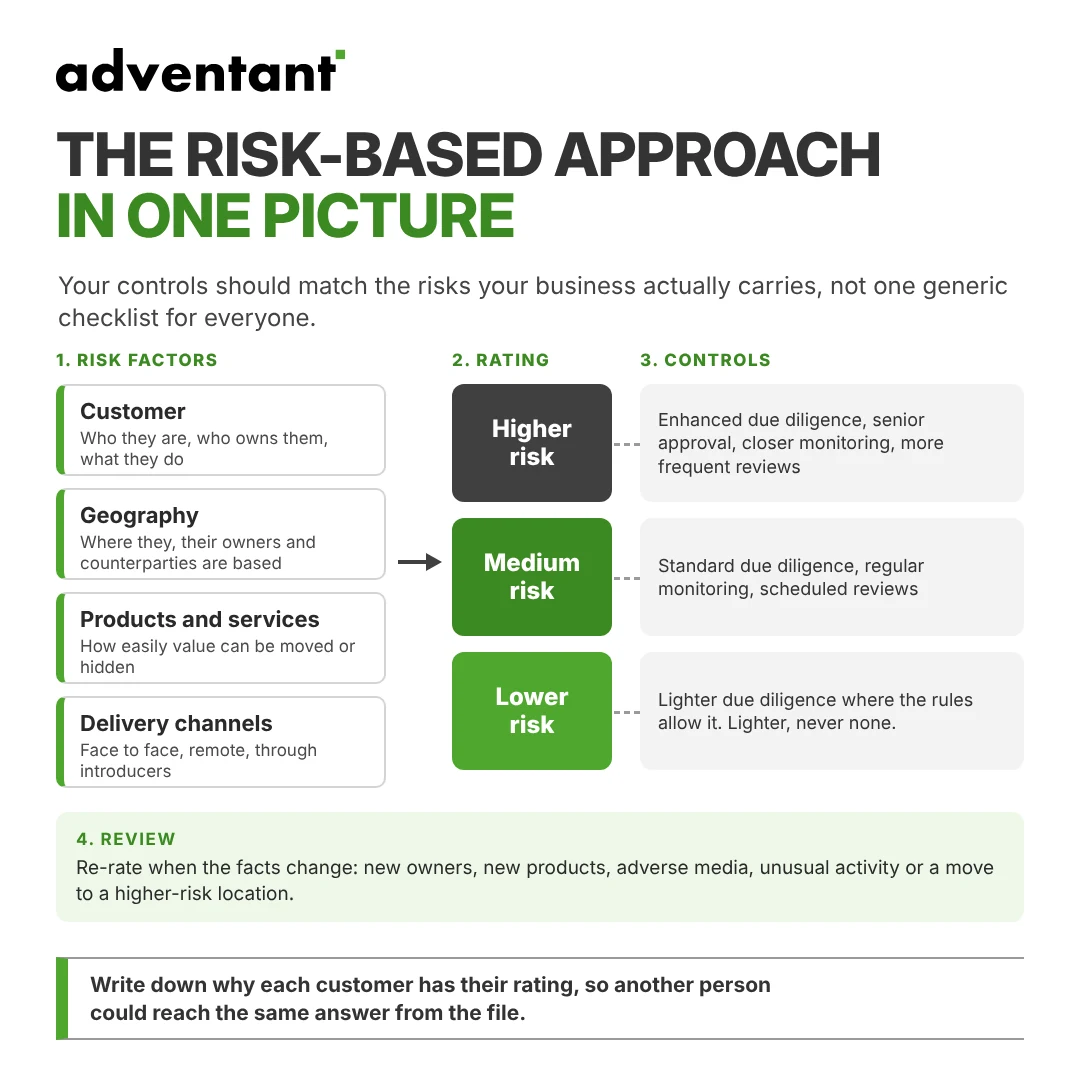
The risk-based approach in one picture
A risk-based approach means your controls match the risks your business actually carries. It is not a generic checklist applied the same way to everyone. The illustration shows the whole chain on one page: the risk factors you look at, how they combine into a rating, and how the rating decides what you do.
Read the explainer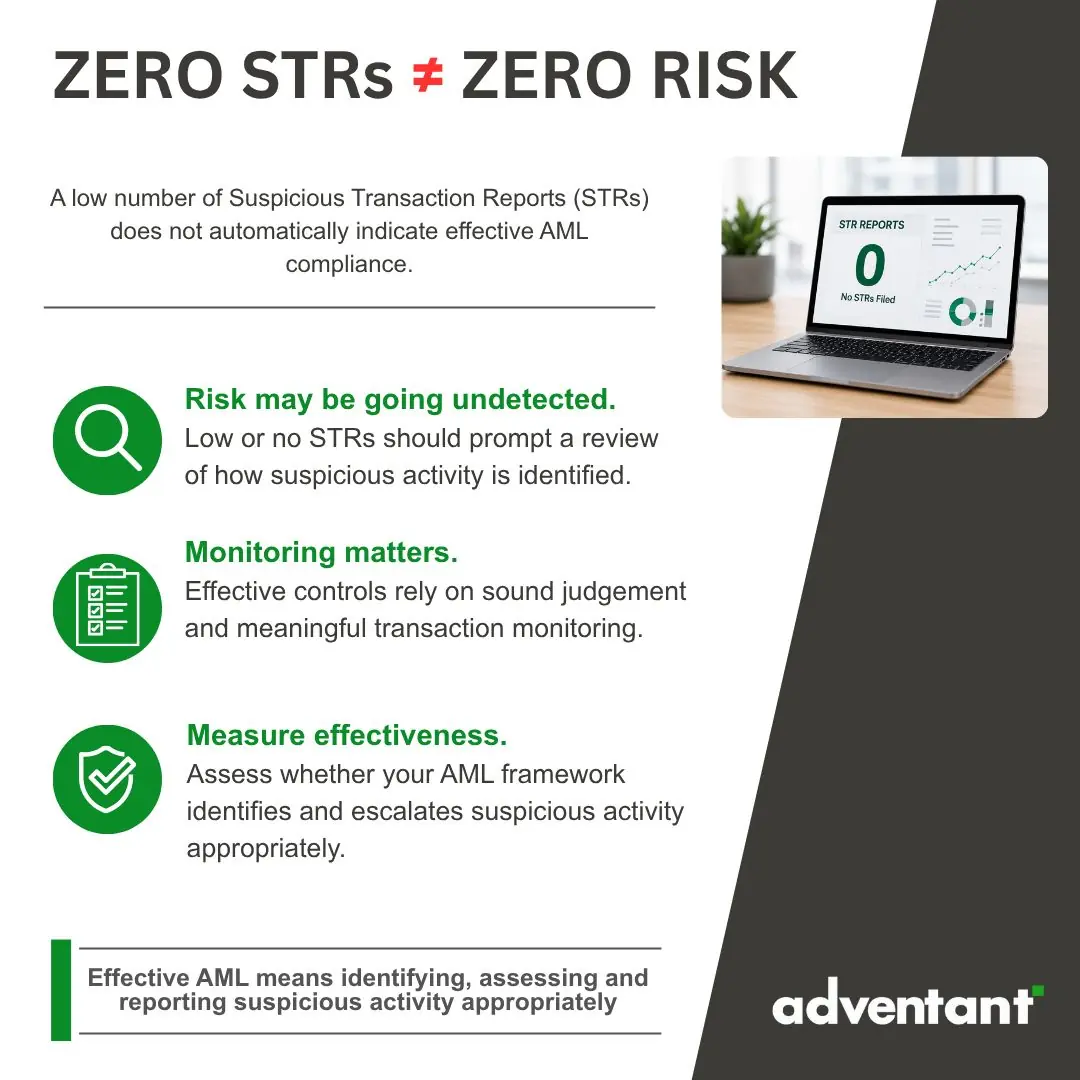
Zero STRs does not mean zero risk
No STRs filed. Does that mean your AML controls are working? Not necessarily. A low number of Suspicious Transaction Reports (STRs) is not, on its own, evidence of effective AML compliance. The real question is whether you are identifying suspicious activity, investigating red flags and reporting when required.
Read the explainer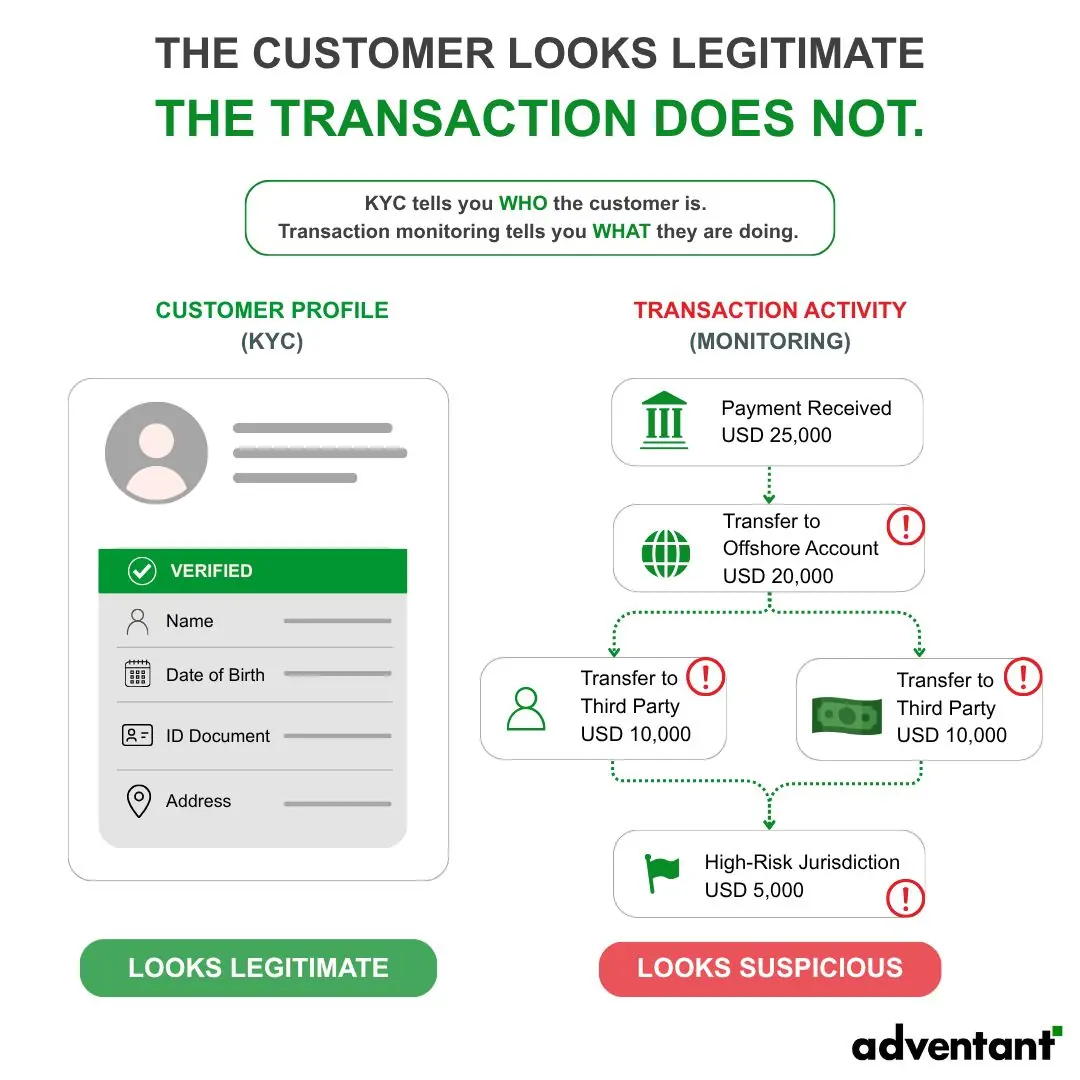
The customer looks legitimate. The transaction does not.
A clean KYC file does not always mean a clean transaction. Your customer may pass every check, but their activity can tell a different story. KYC tells you who the customer is. Transaction monitoring tells you what they are doing.
Read the explainer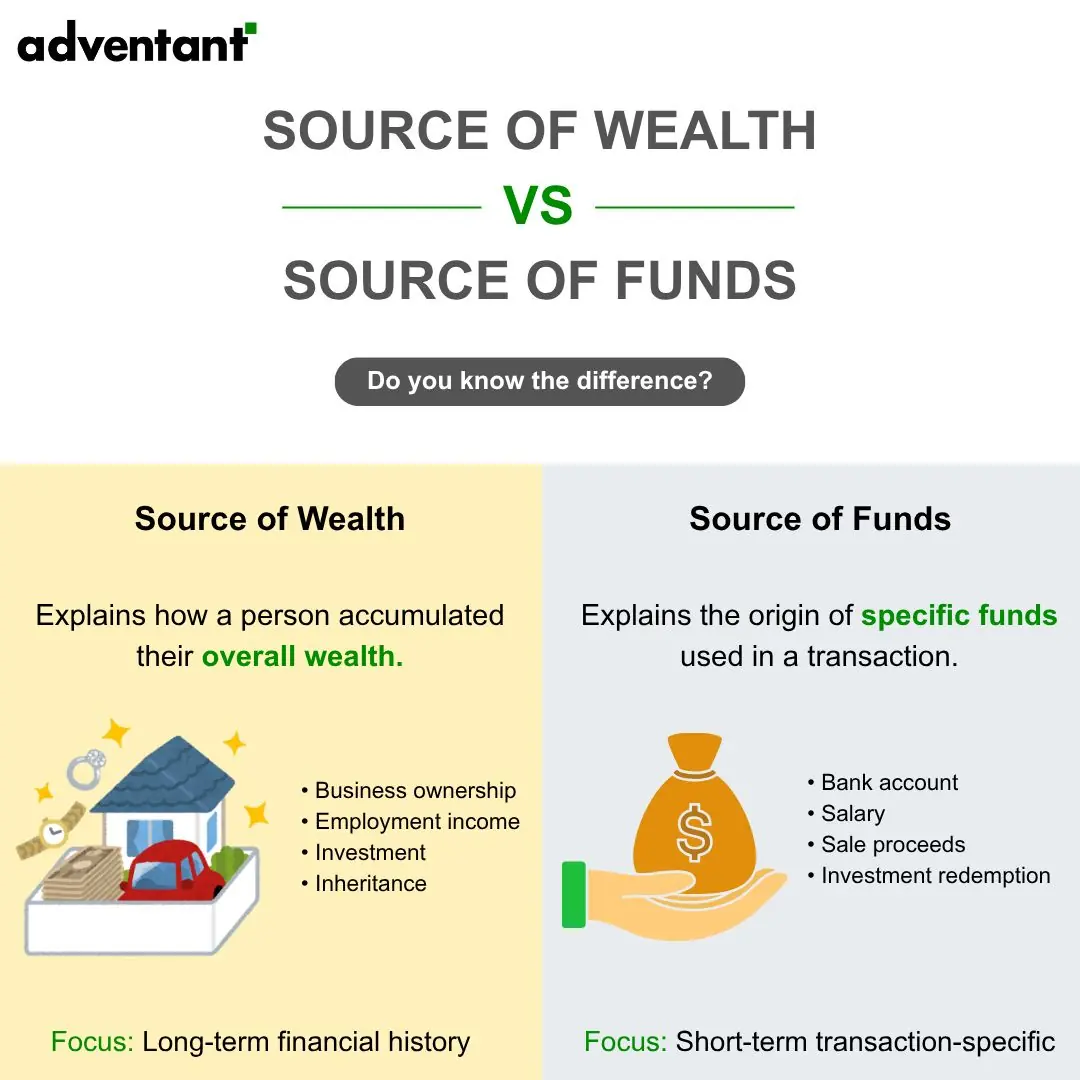
Source of wealth vs source of funds
They sound similar, but they answer two different AML questions. Source of wealth asks how the customer built up their overall wealth. Source of funds asks where the specific money used in a transaction came from. Understanding both is essential for effective KYC, CDD and ongoing monitoring.
Read the explainer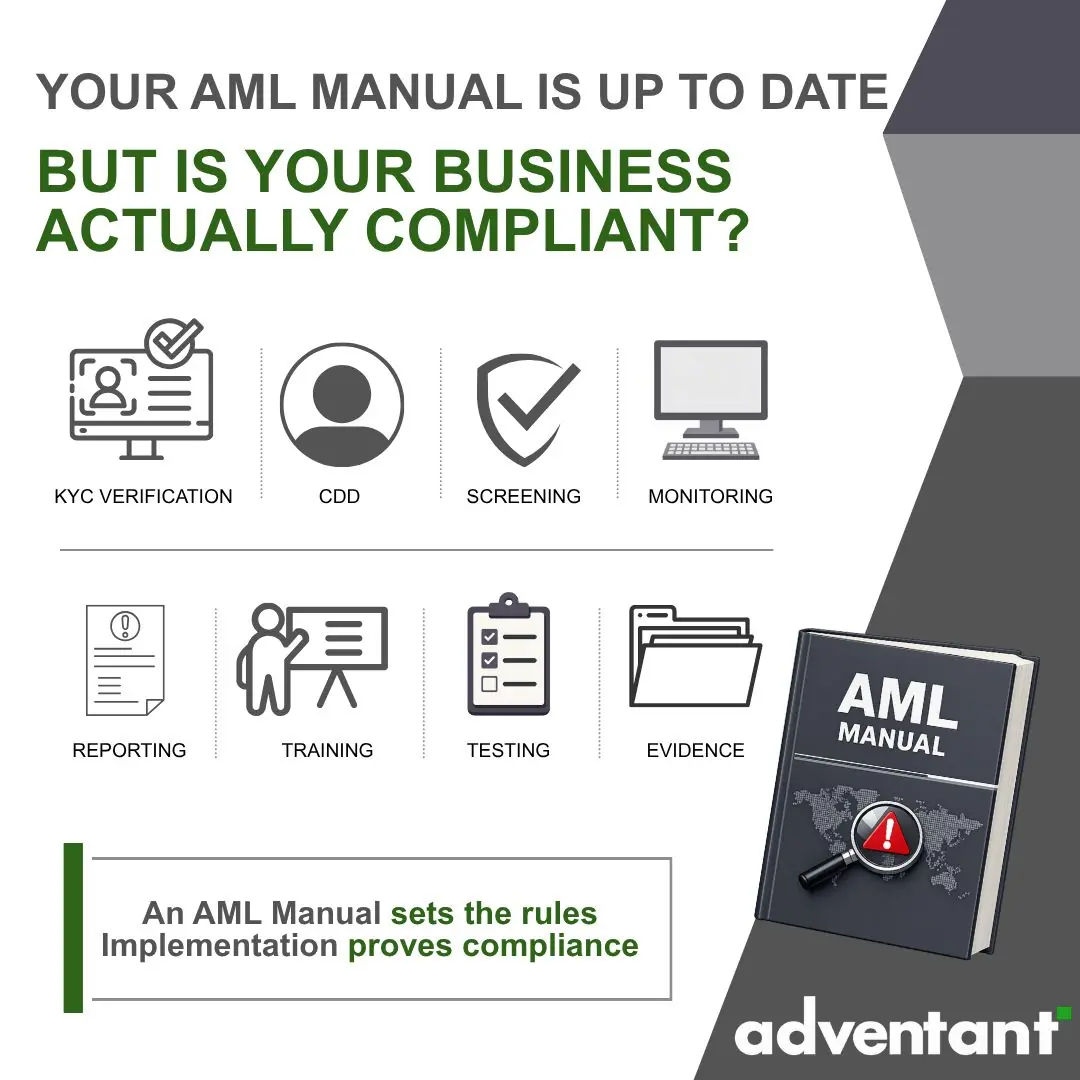
Your AML manual is up to date. But is your business actually compliant?
An AML manual is only the starting point. It tells your team what to do. Real compliance means putting those policies into action every day, and being able to prove that you did. An AML manual sets the rules. Implementation proves compliance.
Read the explainer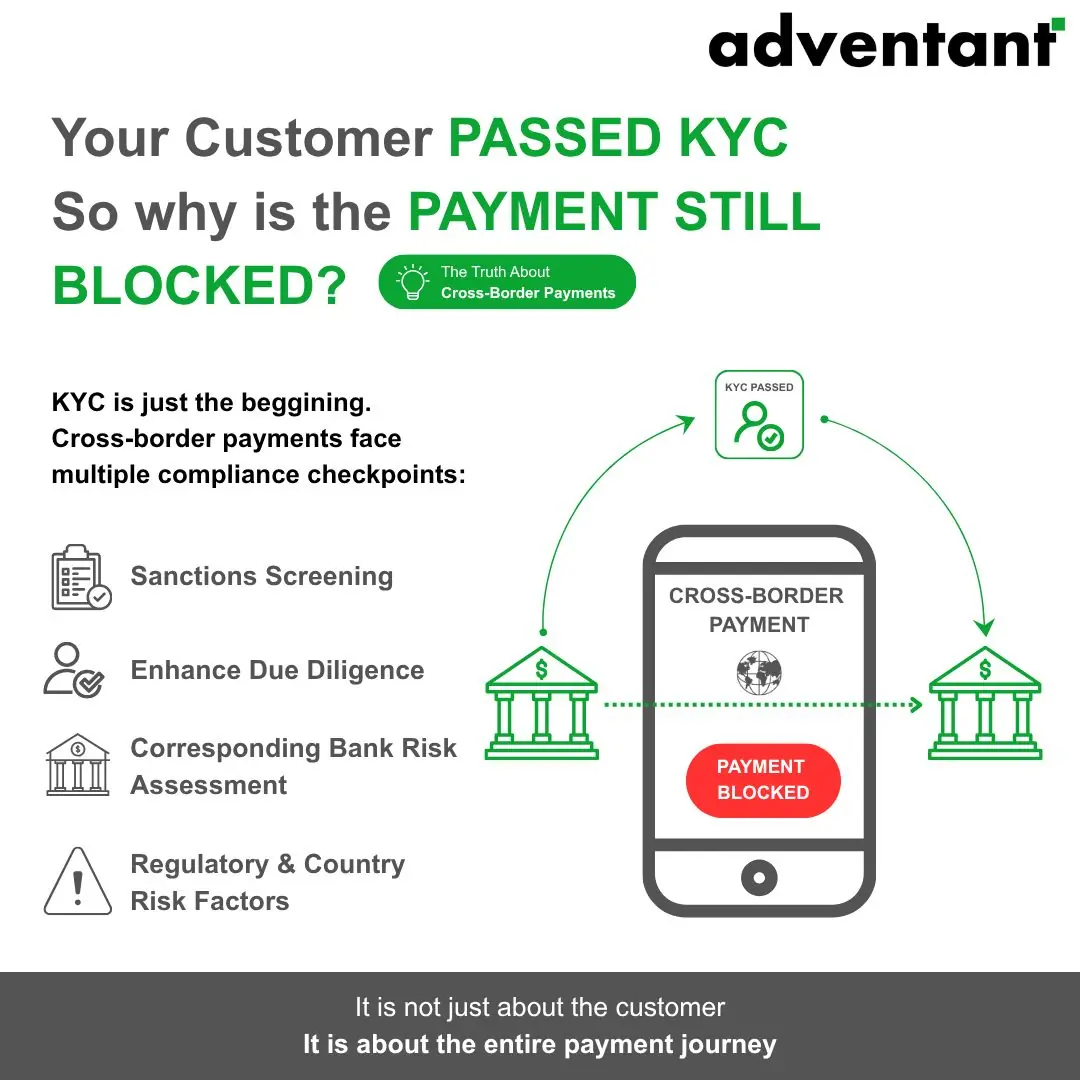
Your customer passed KYC. So why is the payment still blocked?
Passing KYC does not always mean a payment will go through. KYC checks the customer. Cross-border payments face further compliance checkpoints along the way, at your bank, at correspondent banks and at the receiving bank. It is not just about the customer. It is about the whole payment journey.
Read the explainer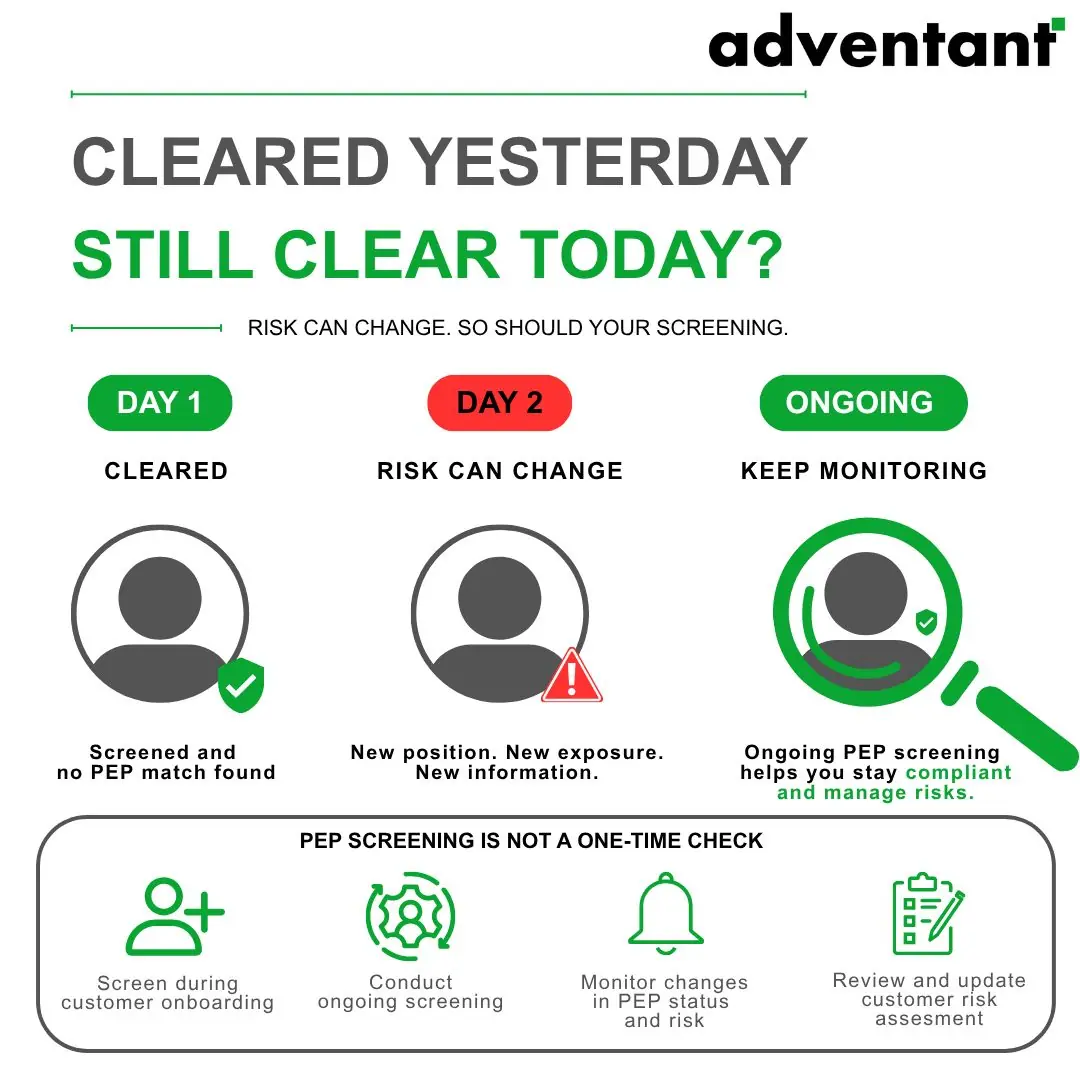
Cleared yesterday. Still clear today?
A customer's risk profile can change. Someone who was not a Politically Exposed Person (PEP) at onboarding may become one later, or new information may change how you see them. That is why PEP screening is a continuing control, not a box ticked once.
Read the explainer
Could ordinary trade payments hide money laundering?
Trade-based money laundering (TBML) uses import and export transactions that look legitimate to disguise and move illicit funds. The paperwork can look perfectly normal. The risk sits in the gap between what the documents say and what really happened to the goods and the money.
Read the explainerYour AML questions. Straight answers.
Every question is now on one page, grouped by topic. Open a topic to see its questions.