
Could ordinary trade payments hide money laundering?
Trade-based money laundering (TBML) uses import and export transactions that look legitimate to disguise and move illicit funds. The paperwork can look perfectly normal. The risk sits in the gap between what the documents say and what really happened to the goods and the money.
At a glance
- TBML hides illicit money inside real or invented trade, so the proceeds appear to come from legitimate business.
- The usual levers are the invoice value, the quantity, the quality or type of goods, the shipping documents, the route and who pays.
- No single document proves TBML. The warning signs appear when you compare documents with each other and with what you know about the customer.
- Customer due diligence, transaction monitoring, document checks and risk assessment work best together.
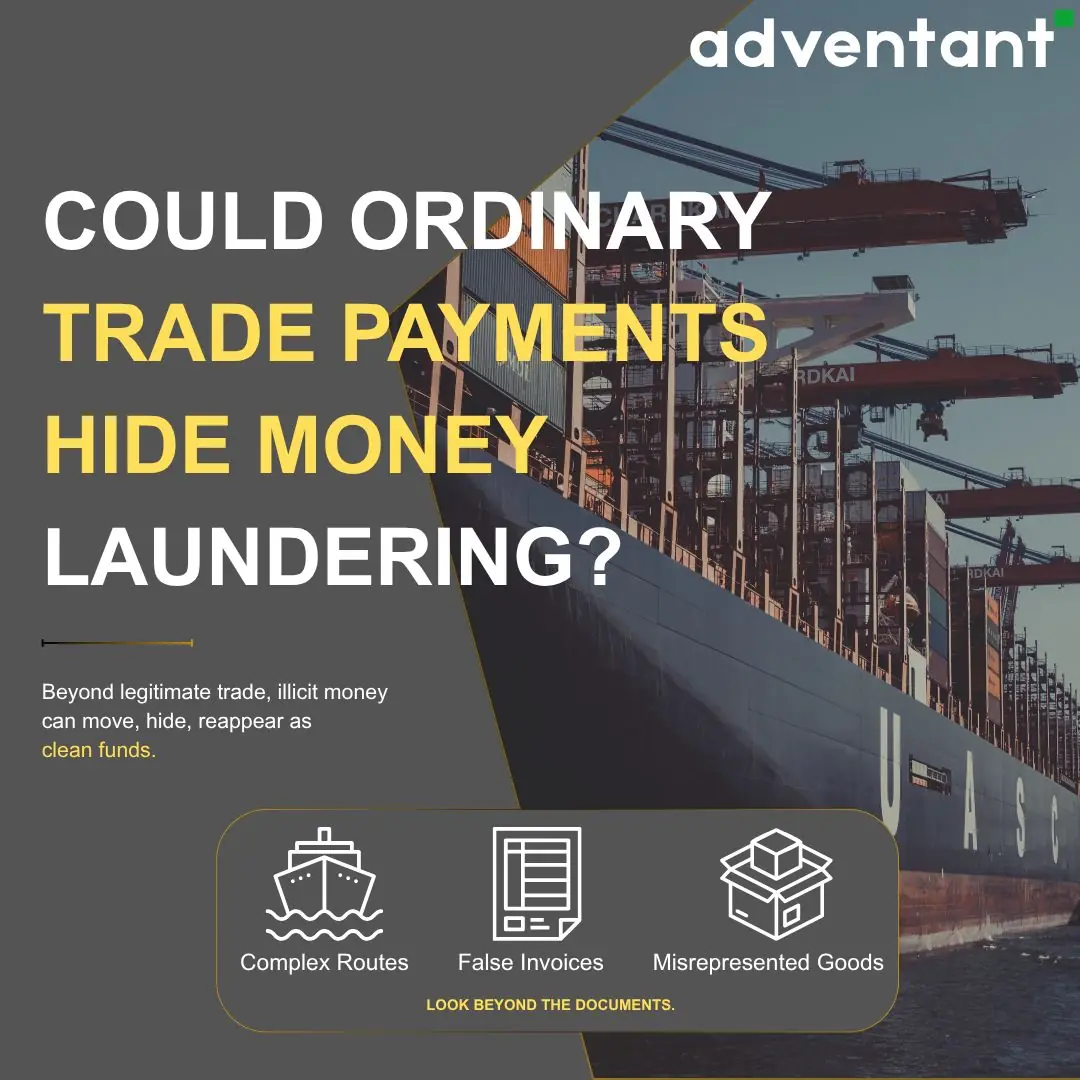
Complex routes, false invoices and misrepresented goods: look beyond the documents.
The detail, step by step
Understand how TBML works
Value is moved across borders by misdescribing trade. A buyer may pay far more than goods are worth, or far less, so that value shifts between the parties without anyone sending an obvious transfer.
Know the methods
Criminals use one or more of these approaches to make illicit money look like the proceeds of normal trade.
- Invoices: overstating or understating the value of goods.
- Quantity: reporting more or fewer goods than were shipped.
- Quality: misrepresenting the type or grade of the products.
- Shipping documents: creating differences between the paperwork and the actual shipment.
- Trade routes: sending goods or money through complex or unnecessary jurisdictions.
- Mode of payment: unexplained payments from or to third parties.
Check the documents against each other
Compare the invoice, the contract, the bill of lading or airway bill and the payment. Prices, quantities, descriptions, parties and dates should agree. Where they do not, ask why and record the answer.
Check the trade against the customer
The goods, volumes, counterparties and routes should make sense for the customer's business as you understood it at onboarding. A sudden new product line, a new region or a new trading partner deserves a question.
Monitor the payments
Look at who pays and who is paid. Payments from parties that are not part of the trade, split payments, or funds routed through unrelated jurisdictions are common signs that the trade is cover for something else.
Escalate and record
When something does not add up and the explanation does not resolve it, escalate it to your compliance officer or MLRO. They decide whether there are grounds to report, and the reasoning is kept on file.
Mistakes to avoid
- Reviewing each document on its own and never comparing them.
- Accepting a price without any sense of the normal market value of the goods.
- Ignoring third-party payments because the customer explained them once.
- Treating trade finance and logistics as outside the scope of AML checks.
- Closing an alert without recording why the explanation was accepted.
Evidence to keep
- Customer due diligence files that describe the expected trade activity.
- Records of document checks, including any differences found and how they were resolved.
- Monitoring alerts on trade payments and the outcome of each review.
- Escalations to the compliance officer or MLRO and the decisions taken.
Where Adventant can help
General information only, not legal or compliance advice. The examples and figures are invented for illustration. Your obligations depend on your activities and your regulator, so check the current rules that apply to you or speak to Adventant about your situation.