
Cleared yesterday. Still clear today?
A customer's risk profile can change. Someone who was not a Politically Exposed Person (PEP) at onboarding may become one later, or new information may change how you see them. That is why PEP screening is a continuing control, not a box ticked once.
At a glance
- Day one: the customer is screened and no PEP match is found.
- Later: a new position, new exposure or new information can change the picture.
- Ongoing screening picks up the change so you can review the customer's risk.
- A change in PEP status should lead to a fresh risk assessment and the controls that match it.
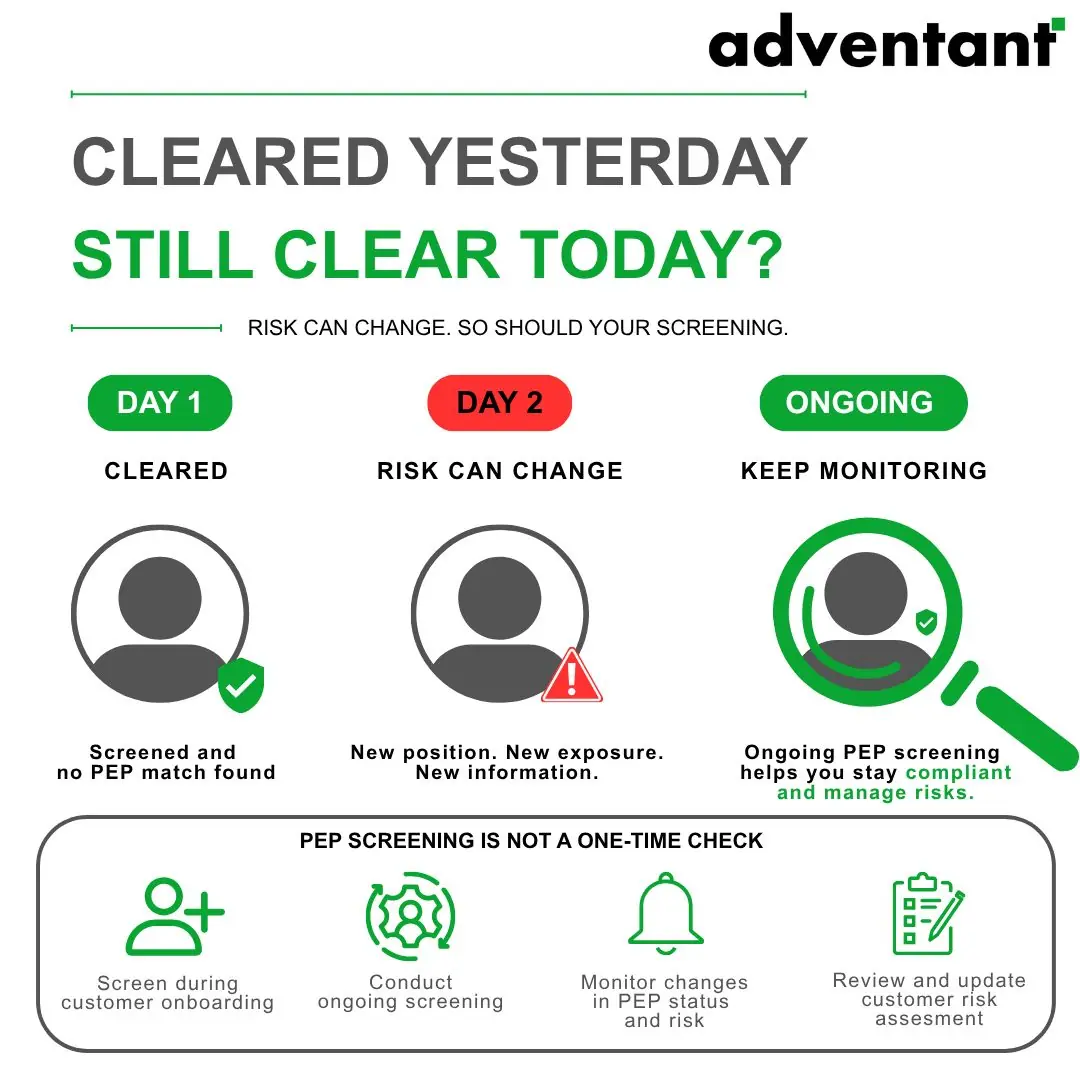
Cleared on day one, risk can change on day two, so keep monitoring.
The detail, step by step
Screen during customer onboarding
Check the customer, and where relevant their beneficial owners and authorised signatories, against PEP data before the relationship starts. Record the result and how any possible matches were resolved.
Conduct ongoing screening
Re-screen the customer base on a regular cycle and whenever your PEP data is updated. People are appointed, elected and promoted all the time, so a clear result last year says little about today.
Monitor changes in PEP status and risk
Watch for events that can change a customer's position.
- A new public role or appointment.
- A close family member or close associate becoming a PEP.
- Adverse media or other new information.
- A change in ownership or control of a corporate customer.
Review the customer's risk assessment
When a customer is identified as a PEP, re-rate them. Apply the enhanced measures your policy requires, such as senior management approval, establishing source of wealth and source of funds, and closer monitoring.
Resolve possible matches properly
Name matches are common. Use date of birth, nationality and other identifiers to confirm or discount a match, and write down how you reached the decision so another person could follow it.
Keep the record
Keep the screening results, the reviews they triggered and the approvals given. This is how you show a supervisor that screening is continuous, not a one-off.
Mistakes to avoid
- Screening only at onboarding and never again.
- Discounting possible matches without recording the reason.
- Screening the customer but not the beneficial owners.
- Identifying a new PEP but leaving the old risk rating in place.
- Not knowing when the screening data was last updated.
Evidence to keep
- Onboarding screening results for each customer.
- Records of ongoing screening runs and the alerts they produced.
- Updated risk assessments for customers whose status changed.
- Senior management approvals for PEP relationships.
Where Adventant can help
General information only, not legal or compliance advice. The examples and figures are invented for illustration. Your obligations depend on your activities and your regulator, so check the current rules that apply to you or speak to Adventant about your situation.